Written by Dion Freeman
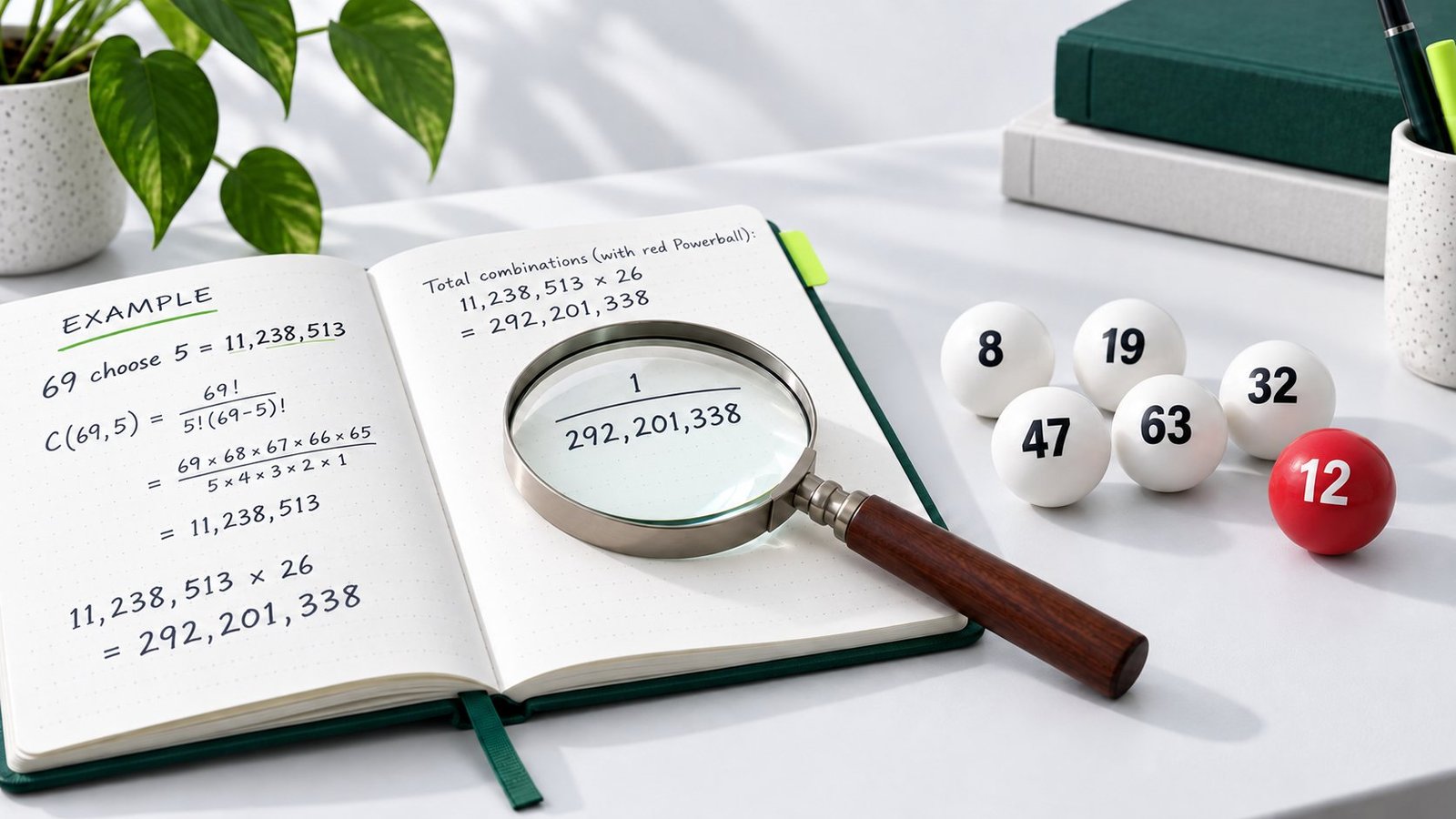
AI-generated editorial illustration. Example numbers are illustrative; calculations use current Powerball rules and do not predict a draw.
A report that a lottery winner used AI can be true without demonstrating that AI improved the odds. The useful question is what the evidence actually establishes.
Four checks before sharing a claim
- Confirm the prize. Look for an operator announcement naming the game, draw date and prize tier. A smaller prize is not a jackpot.
- Trace the AI detail. Was it stated by the winner, documented with a transcript, or added by a later headline? Identify who made the claim.
- Ask for the missing attempts. A winner’s story does not tell you how many other AI-selected tickets lost. A success rate needs a denominator and results recorded before the draws.
- Check dates and rules. A newly published article may describe an old event. Historical analysis must use the number pools and schedule in force at the time.
A simple mathematical check
Under the current Powerball rules, a play selects five different white numbers from 69 and one red number from 26. There are 11,238,513 possible white-number sets. Multiplying by 26 gives 292,201,338 complete combinations, matching the official jackpot odds of one in 292,201,338.
For a fair draw, that chance applies to a valid combination however it was chosen. A familiar pattern, an AI suggestion and a terminal selection face the same draw. Repeating a past result does not make it more likely next time.
Use AI where its work can be checked
AI can help explain a chart, summarize sourced history or organize a checklist. Keep the underlying numbers visible so you can verify the explanation. A practical place to begin is the history explorer; the Data quality page shows its coverage and limitations.
Original explainer. Current Powerball rules and odds checked October 12, 2026; historical games may use different rules.